Monday, February 8, 2010

Show Notes: Lou Berney - Writer

If you rip off a murderous 400-pound Vegas gangster, leave the country. ASAP.

Such sage advice can be found in Lou Berney's recently released first novel, Gutshot Straight. A screenwriter by trade, Berney penned the book during the writer's strike of 2007/08.

Lou has written several feature screenplays, television pilots, and short fiction. His work has appeared in the New Yorker, New England Review, Ploughshares, and the Pushcart Prize anthology. He has taught at the University of Oklahoma, the University of Massachusetts at Amherst, and in the MFA program at Saint Mary's College in California.

We'll talk to Lou about the writing business and making the transition from screen to books.

Tuesday, February 9, 10PM EST.

Listen to The Casting Couch on Blog Talk Radio

Sunday, February 7, 2010

Show Notes: Mary McGinley - Founder of the Carolinian Shakespeare Festival

Mary McGinley is the Founder and Producing Artistic Director of the Carolinian Shakespeare Festival. She has worked as a performer, director, and administrator at many regional theaters across the country. Having received her MFA in Directing from Rutgers University and a professional degree from NYU, Mary teaches acting and coaches actors in New York. We'll talk to her about acting, directing, audition technique, and the incredible staying power of the Bard.

You can find Mary's company website here, and her audition website here.

Listen to The Casting Couch on Blog Talk Radio

Thursday, February 4, 2010

Show Notes - Filmmakers Kelly Schwarze and Charisma Manulat

Kelly and Charisma have spent the last year creating their own independent comedy, "You People," which will appear at film festivals this year. We'll talk to them about how they got it done, and where they're going from here.

Listen to The Casting Couch on Blog Talk Radio
Photobucket

Monday, January 25, 2010

Show Notes - Writer Robin Burcell

Robin Burcell is an FBI-trained forensic artist, and spent more that two decades in law enforcement as a police officer, detective, and hostage negotiator. She is an award-winning author of six novels, including the Kate Gillespie series. We talk to her about the transition from cop to writer, and what she's working on now.

I liked this interview a lot. Robin's got a lot of passion for the business of being a writer. Plus, let's face it, Godard wasn't wrong: all you need for a good story is a girl and a gun. Robin's new book, The Bone Chamber, is now available.

Listen to The Casting Couch on Blog Talk Radio
Photobucket

Thursday, January 21, 2010

Audition Tips

I'm in the process of putting together a cast for a script, as well as casting for a corporate web pitch. The audition process of the "casting call" is more or less the same for both formats, so I thought I'd put some pointers here.

If you don't know how a casting call goes, it's something like this: you walk into a room and meet two or more strangers. There's a camera at one end of the room, and someone tells you to step in front of it. If the project is a corporate ad or a commercial, there's probably a teleprompter on the camera, and it has a script. If not, then someone just hands you a piece of paper (if you're lucky, they sent you the script days ago; if you're not, it's going to be a cold read).

After you've stepped in front of the camera, you might be asked to slate yourself. That means saying your name, your agent's name, and anything else the casting director wants on tape. Then someone says, "Go," or "Action," or "Whenever you're ready," and you start to read. After thirty seconds or less, that same person will say "Thanks," or "Stop," and then tell you that they'll be in touch.

You leave the room and wonder if they'll really be in touch, and you think that they probably won't. And you're right.

It isn't always your fault. If you want the breakdown of a casting call from someone that shoots them, here's my take. I don't know if it's all good advice, but it's advice nonetheless. Most of it relates to corporate pitches and ads, because that's what I shoot the most. These are off the top of my head and in no particular order.

1) It doesn't really matter if you shake my hand, look me in the eye, or otherwise ingratiate yourself. It only matters if you can act, and if you can read well on the first go. Not perfectly, but well.

2) Any casting director will know in about 2.5 seconds whether you're any good. That's not an exaggeration. One spoken sentence is about all it takes. They don't need your resume to know if you've done cold reads before. If you haven't done cold reads, it means you haven't auditioned much, which means you haven't acted much. It will show. If the casting director is unkind, they'll tell you to stop reading after ten seconds. If they're a wimp like me, they'll give you a whole minute or two, just so you don't think you wasted your time getting down to the audition.

3) If you're pitching to the lens, never take your eyes off the lens. Ever. Newscasters don't, and neither should you. It makes you look shifty and is the first sign of an amateur.

4) With all of the cheap video cameras lying around, it amazes me that actors trying to get into film and TV don't tape themselves and practice in front of a lens. A small, decent video camera will cost you no more than $200. A usable tripod will cost another $30. Use it. Set it up and read to it. Get used to being in front of a lens and talking to it. Talking to a camera is not a natural act, and it takes practice. Better yet, get someone to tape you, so that you're used to be watched and scrutinized.

5) Practice more.

6) Practice again.

7) When you're done a read, keep looking into the lens until someone says "Cut," or "Thanks." Pros don't look away from the lens until they hear that, because they know an editor needs time to cut away or fade out after the dialogue ends. Since they know this, they habitually keep their eyes on the lens even after doing a rehearsal or a cold read. It's the mark of a pro. Actors that finish reading, then immediately look to the director for feedback, are obvious amateurs.

8) There's nothing wrong with being an amateur, except that it means you will need more direction. This means longer shoots. Longer shoots means more money, for studio time, a director's fee, editing, maybe even aspirin. This is why a limited number of pros get most of the good corporate and commercial spots: they're good, they're easy to work with, and they nail things in a small number of takes. Unfortunately, this means that amateurs have to wait for their "break" to get a job. But while waiting, they should...practice.

9) Practice again. Get a computer and write a script on it. Have a friend put the laptop or monitor on a shelf at eye level, with the camera just above or below it. Stand ten feet away. Have your friend scroll down as you read the script. Do it again. And again. And again.

10) Loud people tend to come off as pros when they walk into a room. I don't mean jerk-loud or wanna-be-loud. I just mean gregarious and slightly above conversation level. They sound confident and like they've been there before. I don't suggest you try it too hard, unless you want to sound like a dork, but I say it in passing.

11) Don't smack your lips when you talk. Try not to lick your lips, either.

12) If you need a glass of water before you start, then ask for one. Most casting directors are not jerks. Don't be afraid of them. They'll give you a glass of water.

13) You might not be right for the part, and there might not be a good reason why. Not your fault. Move on.

14) Listen to direction. I often give people two or three reads, even if they suck, and I'll give them a couple of pointers. My philosophy is this: if they suck, at least they'll tell their agent I was cool with them. If that's the case, the agent will probably be cool with me. (I also run the risk of agents treating me like an acting coach for their new guys, but it's an acceptable risk). However, if I give a pointer and you blow me off because you know it all (when you obviously don't), then you can forget working with me again until you get an Oscar. I had one guy who had never been in front of a prompter before. I tried to coach him a bit, but he kept cutting me off in mid-sentence with "Got it," and a wave of the hand. Do you think I passed him on to the corporate client that was going to be there for his taping and pay for his work?

15) That said, casting calls are not acting school. You're expected to know your craft. It is, after all, a job interview. "But how can I learn when I don't get gigs?" you might ask. To which I say...practice.

16) If the font on the teleprompter is too small, say so. They'll increase it.

17) Don't wander. Keep your feet firmly planted on the ground.

18) Don't ask what you should do with your hands. That's amateur. Keep your hands at your sides. Use them for inflection when the moment seems right, but don't flap them all over the place and distract from the medium, which is your face and voice.

19) It is the teleprompt operator's job to slow down or speed up according to your read. Don't follow their speed. They follow you. Don't panic and read too fast, and don't slow down to robot-level. Just read the way you think it should be delivered, and the operator will try to keep your next line in the middle of the screen. If he screws up, just keep reading. He'll get it back on track. The only exception to this is when a script needs to be delivered in an exact timeframe. If that's the case, they'll tell you.

20) If a casting director asks if you've done prompter work before, lie and say yes. Remember that friend with the laptop?

21) Casting directors don't make the final call on whether you get a job or not. They tape a number of people, cut out the bad ones, and send their suggested ones to a director or corporate client. Those people get the final call. The casting director can be of an immense help to you, because if they like you, they'll suggest you strongly. Piss off a casting director by acting like a bigshot, and you can forget it. Chances are, your clip will never get out of the camera.

22) Casting directors want you to do well. They do not want you to fail. When you walk into the room, they want you to succeed, because they want to find someone they can easily work with for years to come, and they want to impress their client by finding good talent. The casting director is the last person from whom you should feel pressure. (This is a personal take; for all I know, some casting directors are nasty tyrants. But trust me: I want you to do well. I do. And when you don't do well, I get a sinking feeling in my stomach because I know you're wasting your time and you don't have it. I hate that feeling, but it's part of the business. I have to figure that a lot of other casting directors feel the same way).

23) I've been saying the word "read" a lot. "Read" means speak. If you're in front of a prompter, we shouldn't see your eyes following the script. Generally, the closer to the camera you are, the more we'll be able to tell that you're reading. You really have no control over this, because if the director wants you there, and the camera here, you'll have to deal with it. A good trick is to slightly move the tilt of your head every couple of sentences. A little left, a little right, a little down, a little up. And I mean a little. Just a touch. Too much, and you'll look weird. You'll know what I mean when you...practice. Get in front of a camera and do some reads. Use the laptop trick, and also do some memory reads. Play it back and watch yourself. Work on it.

24) Your resume doesn't mean anything. Bring it with your headshot anyway, because it has your contact details on it. But really, the following criteria are of utmost importance. a) Look. b) Delivery. c) Easy to work with. You may have been in twenty plays and fifteen commercials, but if your look is wrong for the part, or if you act like a jerk, then you're not going to get the job. The only people that can act like a jerk and get the job are stars, and stars don't do casting calls.

Good luck, and one last time: practice.

Monday, January 18, 2010

Dan Eberle - Independent Filmmaker

Dan Eberle: "Creating any work of art starts with a strong affirmation that it will happen which is, by definition, positive thinking. In a big group project like film, the initial affirmation (re: this is going to happen) has to be powerful and unwavering."

Dan stops by again to chat about filmmaking, and the conversation he's starting on his blog at integratingspirit.com.

Listen to The Casting Couch on Blog Talk Radio
Photobucket

Tuesday, January 12, 2010

Show Notes - Screenwriter Steve Allrich

Steve Allrich is a screenwriter in Los Angeles. He wrote the screenplay for the thriller "The Canyon." We'll talk to him about screenwriting, and what it was like watching his first screenplay come to life.

Monday, January 11, 10PM EST.

Listen to The Casting Couch on Blog Talk Radio

Wednesday, January 6, 2010

Show Notes - Alison Slight - Event Designer

If you're a Somebody with a capital S, you don't throw parties. You host events and extravaganzas. Alison Slight is the managing director of Candice & Alison, one of Toronto's premiere event design agencies. Their clients include De Beers, Christian Dior, Louis Vuitton, Rolls Royce, Chanel, and 20th Century Fox.

We'll talk to Alison about what's happening right now in the entertainment and fashion industries, and what she does to showcase her A-list clients to the world.

Listen to The Casting Couch on Blog Talk Radio
Photobucket

Monday, December 28, 2009

Show Notes - Writer Julie Chibbaro

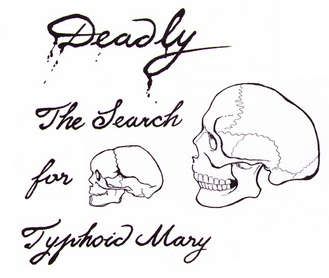
Julie Chibbaro is the author of Redemption (Simon & Schuster, 2004), a novel of love and betrayal set in pre-colonial America. In 2005, Redemption won the American Book Award. Julie Chibbaro’s stories have appeared in The Prague Revue and Slingshot, and her articles in The Montreal Gazette and The Prague Post. Her next novel, about the search for Typhoid Mary in New York City, will be published by Simon & Schuster in early 2011.

I enjoyed this interview a lot. Julie talks about making the transition from literary to YA fiction, her changing career ambitions, and being accepted - or not - by the literary fiction circle.

Click below for the interview.

Listen to The Casting Couch on Blog Talk Radio
Photobucket

Tuesday, December 22, 2009

Show Notes - Independent Filmmaker Kely McClung

After a 20 month journey, independent filmmaker Kely McClung is wrapping up his latest feature film, "Kerberos." He's a veteran of the film festival circuit, where his feature film "Blood Ties" garnered several awards. We'll talk to him about his films and his life of making movies.

Listen to The Casting Couch on Blog Talk Radio
Photobucket

Thursday, December 17, 2009

Show Notes - Literary Agent Michael Bourret

Michael Bourret has been a literary agent with Dystel & Goderich Literary Management since 2000. He now works out of DGLM's Los Angeles office, representing clients and actively seeking new film and television opportunities. We talk to him about what he's looking for right now, the type of query letters that grab his attention, and how writers should go about the business of being a professional writer. We also talk about the new age of e-books and the Kindle.

Click below for the interview.

Listen to The Casting Couch on Blog Talk Radiomichael bourret

Friday, December 11, 2009

Show Notes - Ayelen Liberona

Dancer, choreographer, filmmaker, free spirit. We'll talk with Ayelen Liberona.

You can find Ayelen's website here, and find out about her film production company here.

Click below for the interview.

Listen to The Casting Couch on Blog Talk Radio
Photobucket

Thursday, December 10, 2009

Show Notes - Writer/Editor Chris Gray Faust

Chris Gray Faust, December 3, 2009:

But what bothers me the most is what my firing represented. See, I’ve been learning all the tricks that a modern multi-platform journalist is supposed to know. In the past 22 months, I’ve blogged, tweeted, shot photos and videos, and handled speaking engagements. I edited my section, managed my high-personality staff and then in my spare time, I wrote cover stories – something that very few other editors at USA TODAY do. I hustled and I cajoled and I ended up out on my ass anyway.

We'll talk to former USA Today writer/editor Chris Gray Faust about how media has changed so drastically in the last ten years, and what writers can do going forward with their careers.

Click below for the interview.

Listen to The Casting Couch on Blog Talk Radio
Chris Gray Faust

Thursday, December 3, 2009

Show Notes - Producer Larry Allen

Larry Allen has been a TV and film producer for over ten years. He recently moved to NY after an 18-month stint in Iraq, where he was hired by the US Department of State to open the first independent production facility for the Iraqi people. Larry Allen has produced several films, including Watercolors, an award-winning favorite of the 2009 festival circuit. His clients include NBC, Discovery Channel, PBS, and ESPN.

Click below for the interview.

Listen to The Casting Couch on Blog Talk Radio

Tuesday, December 1, 2009

Show Notes - Actor/Director Jonathan Robbins

Jonathan Robbins drops in to talk about acting and directing. He's appeared in numerous commercials and independent films, and received the Best Actor award at the New Voices Film Festival for his role in the WWII film Broken Lines. Behind the camera, Jonathan's shot and directed several productions and received Best Director honors. We'll talk with him about what it's like being an actor/director navigating the film festival circuit.

Click below for the interview.

Listen to The Casting Couch on Blog Talk RadioPhotobucket

Thursday, November 26, 2009

Show Notes - Independent Filmmaker Dan Eberle

Dan Eberle was a premiere jazz guitarist who decided to take a run at film. We're glad he did. It's been a great sprint right out of the gate. He's written, directed, edited, and starred in his own independent pictures, earning instant recognition and praise as a force to be reckoned with. We'll talk to him about his career as an independent artist, and discuss his latest film The Local (trailer below), a gritty crime drama filmed on the streets of Brooklyn.

Click below for the interview.

Listen to The Casting Couch on Blog Talk Radiodan eberle

Tuesday, November 17, 2009

Show Notes - J. Elaine Marcos

Photobucket
J. Elaine Marcos has appeared on Broadway in such shows as A Chorus Line, Sweet Charity, Miss Saigon, and Wonderful Town, among others. You recently saw her in the movie Every Little Step, which chronicled the audition process for A Chorus Line. J. Elaine will tell us what it's like working in the most competitive city in the world of theatre.

Listen to The Casting Couch on Blog Talk Radio

Thursday, November 12, 2009

Show Notes - Director John Banovich

We talk with John Banovich, an award winning director and cinematographer. His documentary and commercial work has taken him all over the world. In 1997, John survived a horrific car wreck that almost killed him. It took him months to get back on his feet. Doctors said he would never walk again. They were wrong. John eventually picked up where he left off. Still working hard, John has released a new feature film, "Sharp As Marbles."

Click below for the interview.

Listen to The Casting Couch on Blog Talk RadioJohn

Wednesday, November 11, 2009

Show Notes - Freelance Writer Lisa Collier Cool

Lisa Collier Cool is one of the most prolific writers working today. She has penned hundreds of articles for such diverse publications as the AP, Glamour, Cosmo, Oprah Magazine, The Wall Street Journal, Harper's Bazaar, Penthouse, and Writer's Digest. She has received 18 journalism awards along the way, and has also written a dozen books. We talk to her about the freelance writing business, and how she stays on her game.

Click below for the interview.

Listen to The Casting Couch on Blog Talk RadioPhotobucket

Friday, November 6, 2009

Show Notes - Author Marsha Moore

Marsha is a Canadian writer living in London, England. Her first book, 24 Hours London, has recently hit the shelves. We talk to Marsha about what it's like publishing her first book, and discuss what to do in London at any hour of the day or night.

Click below for the interview.

Listen to The Casting Couch on Blog Talk RadioPhotobucket